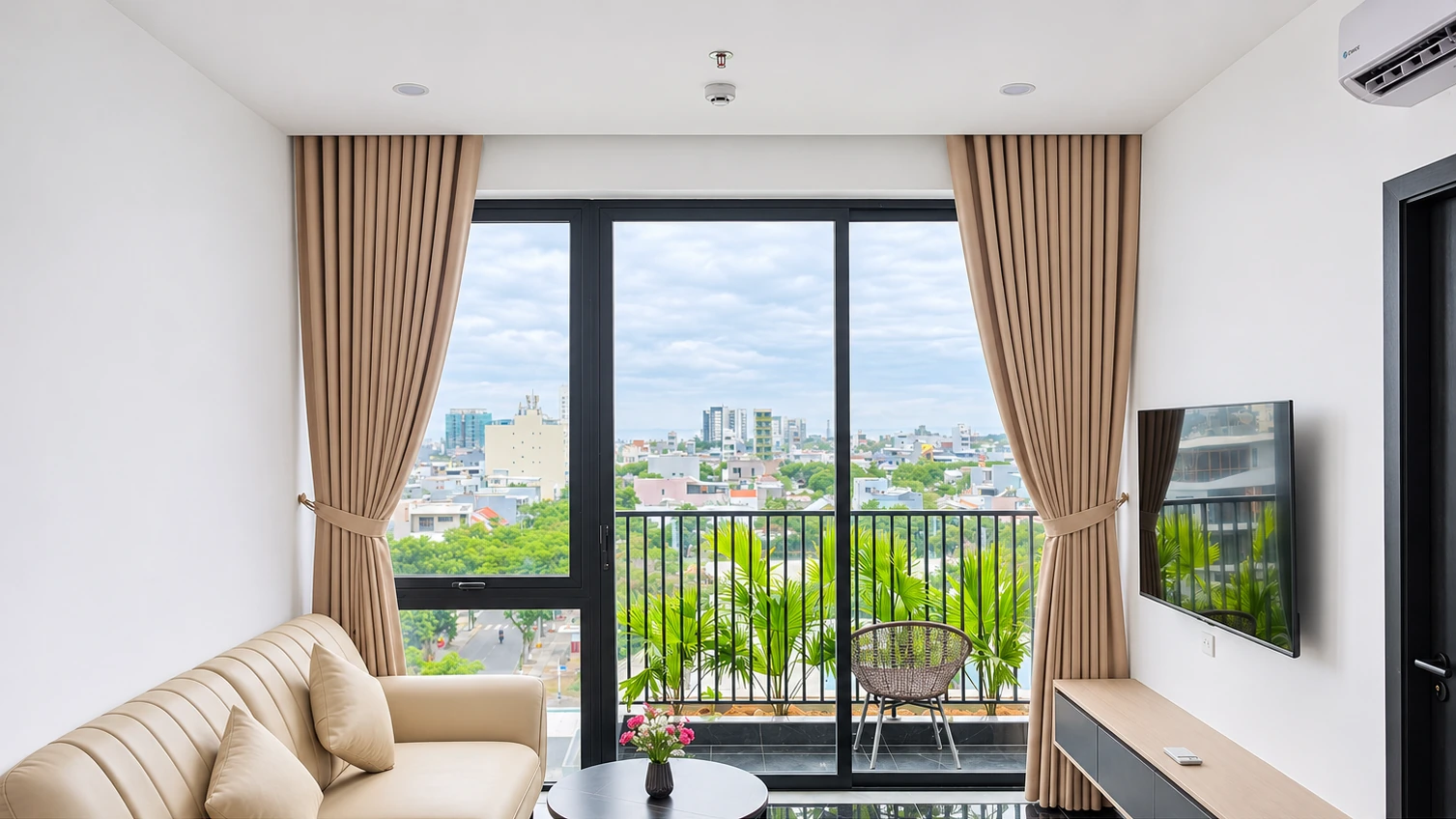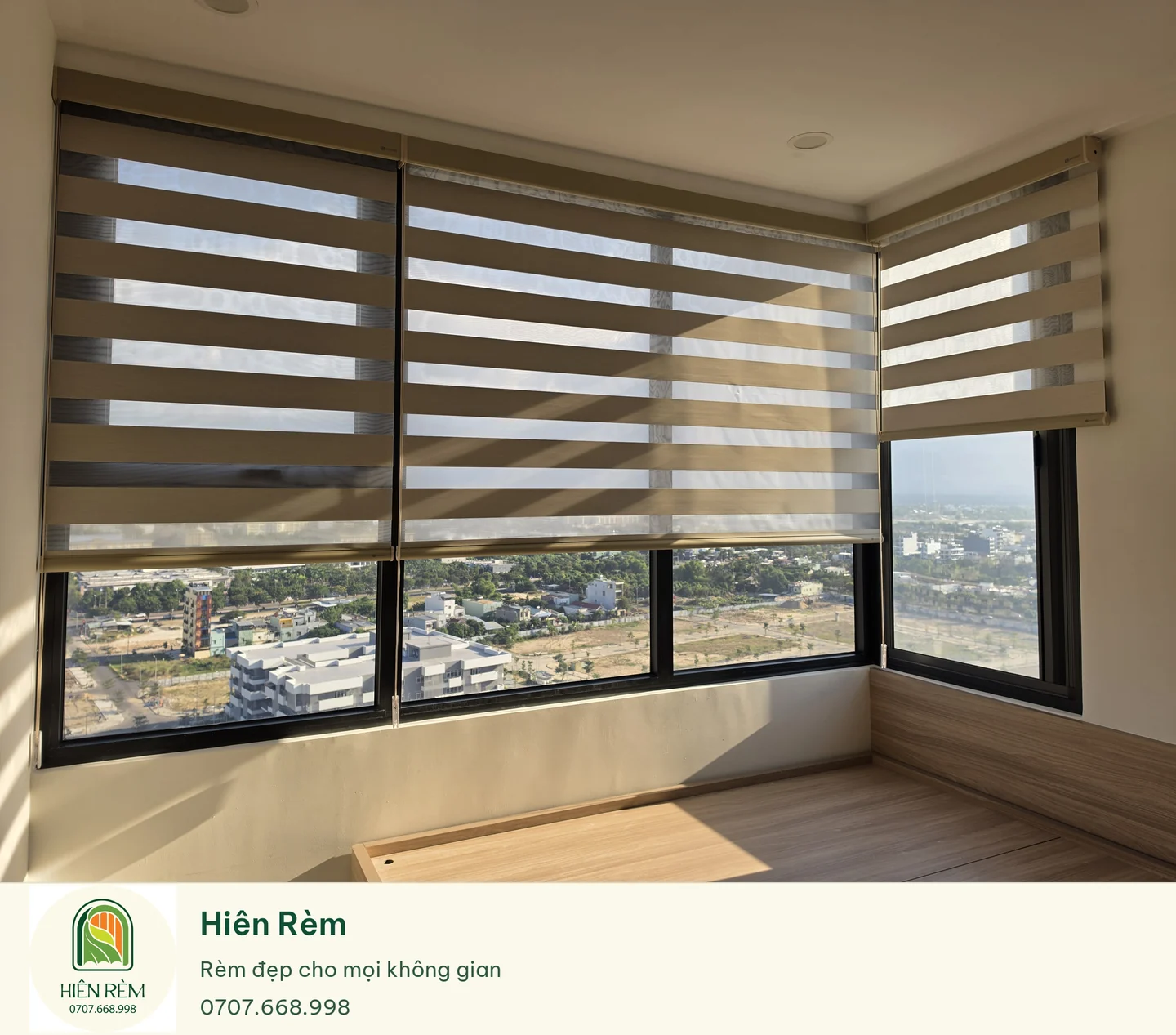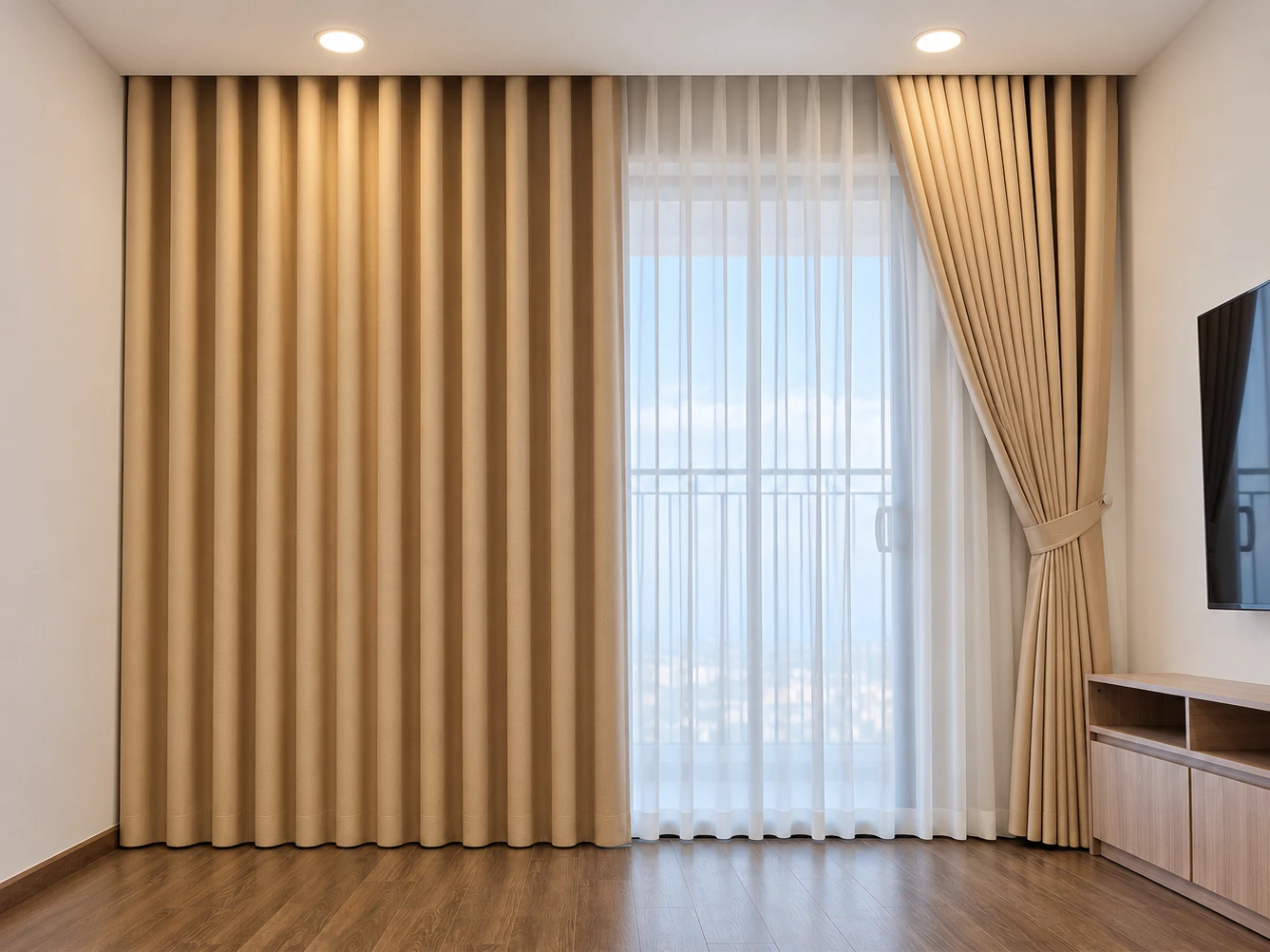
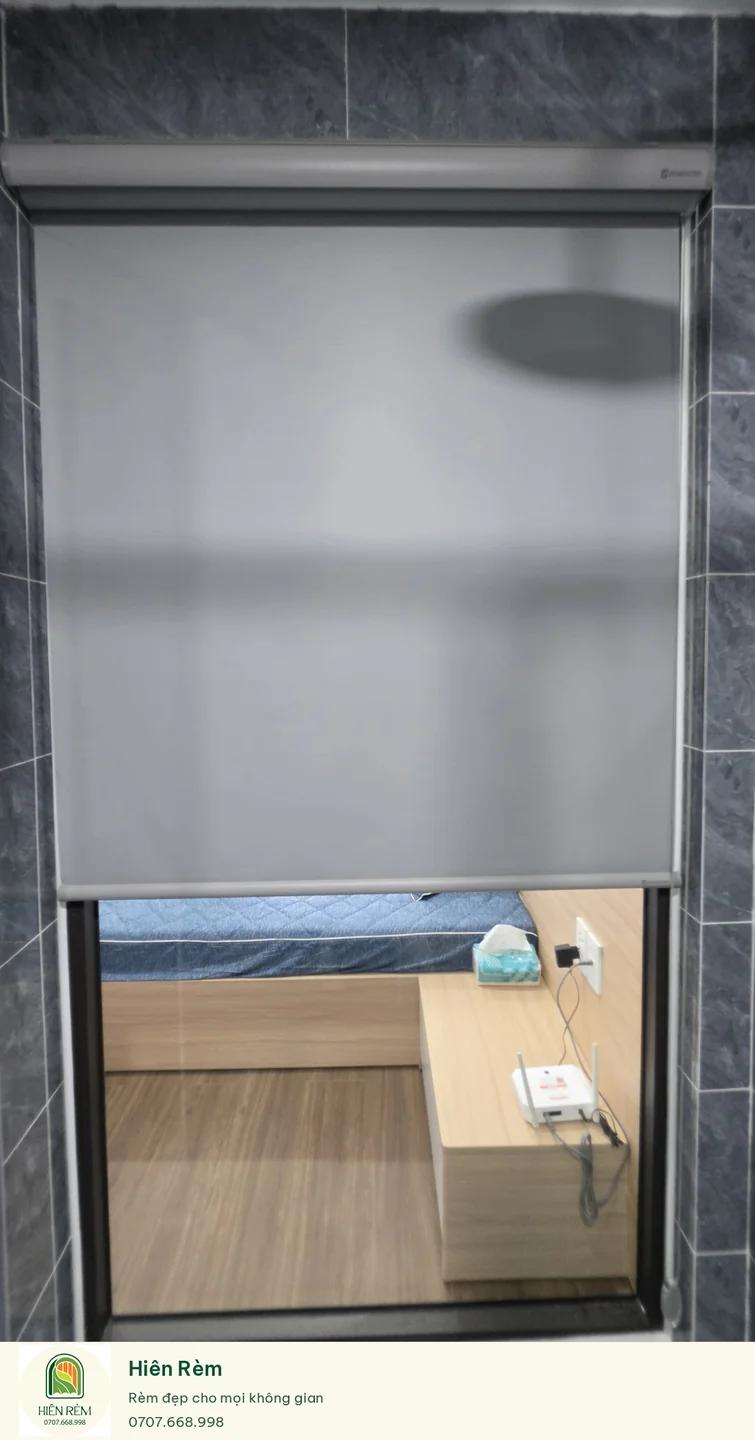
Inside mount: within the opening
An inside mount sits within the opening and leaves the frame visible. It needs enough depth for the roller or headrail to clear the handles. When raised, the roll or stack still occupies some space at the top.
For a bedroom, ask about side gaps. Even a light-blocking fabric can let daylight pass around the edges of the fitting.
Outside mount: beyond the opening
An outside mount extends over the wall around the opening. It is an option for a shallow frame or extra coverage at the edges. First check whether it would obstruct a cupboard, switch or opening door.
The extra coverage needs to suit the fitting space. Send the whole window wall so Hiên can discuss it before the site check. There is no need to add one fixed allowance to every window.
Send the opening sizes and intended position
Record widths at the top, middle and bottom, and heights at the left, centre and right. Add the recess depth and a photo of projecting handles. Keep all readings for the fitter, especially where tiles or trim narrow part of the opening.
For a roller blind, the overall width including fittings differs from the fabric width. Ask which one the quotation specifies so the fabric covers the intended area.
Choose for the room’s everyday use
If you want a tidy frame, start by checking recess depth. For a darker room, discuss coverage and gaps together. Open inward-opening windows fully before agreeing the fitting position.
Send Hiên a closed-window photo and an open-window photo, with what you need: less glare at a desk or more privacy for sleeping. That gives us a starting point for discussing roller, zebra or wooden blinds.
Reference material: Hunter Douglas — Inside vs Outside Mount Blinds · Blinds 2go — Measuring Guide
Choosing curtains for your home?
Send Hiên a few photos of your windows and tell us what you have in mind. No measurements yet? Photos are a good place to start.
Enquire by emailView related curtains or blinds