Does the sun wake you too early?
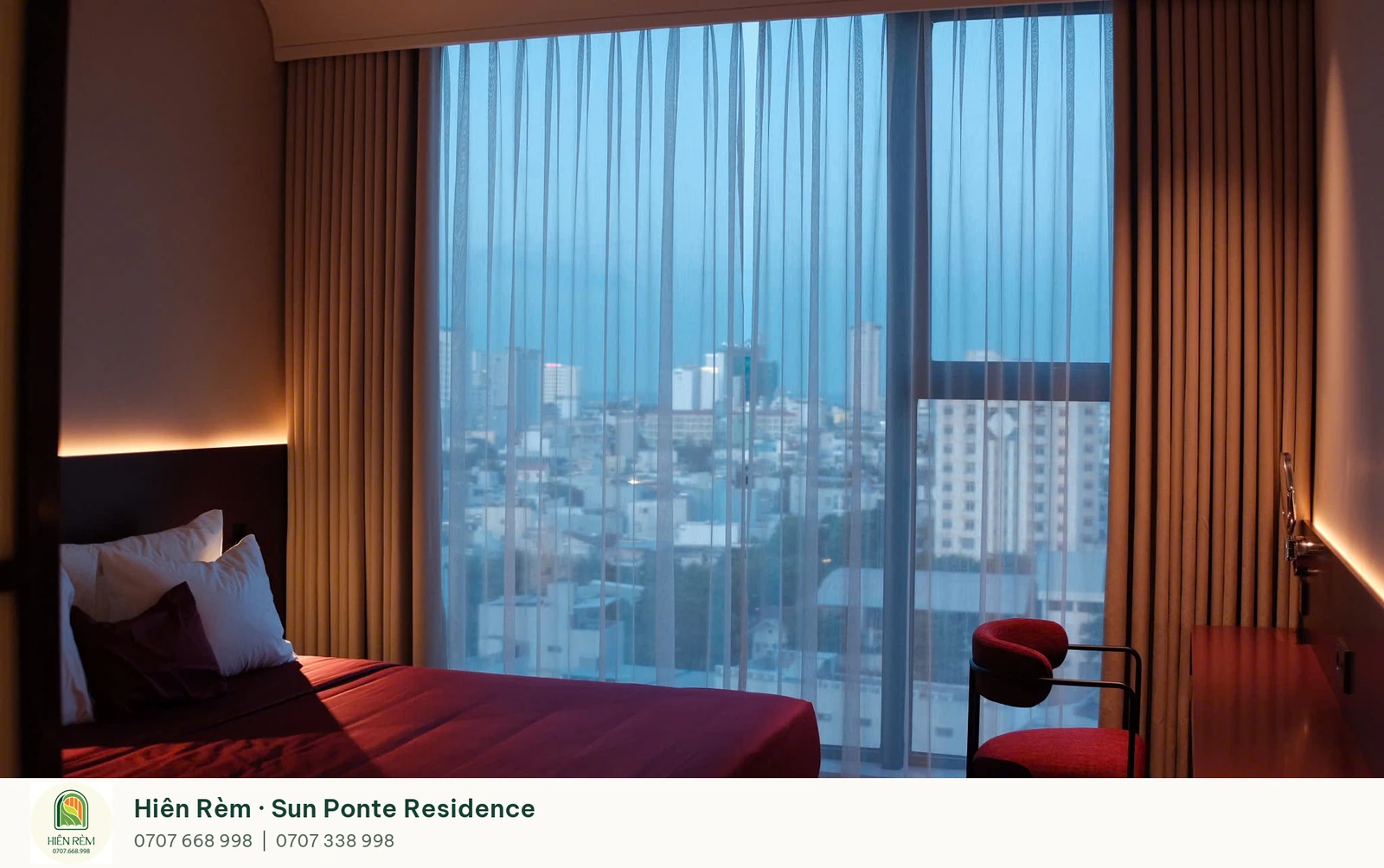
If the sun finds your pillow every morning, photograph the window at that time. If you usually take an afternoon nap, a photo around nap time will be more useful. The same bedroom can need different light control depending on who sleeps there and when.
Tell Hiên which way the window faces, when you sleep and how dark you like the room. These everyday details help us discuss a fitting that suits your routine.
Look around the curtain edges, too
Even with a light-blocking fabric, daylight may enter at the sides, above the track or where the panels meet. Ask the person measuring to explain how far the curtains will extend beyond the window, how the panels will close and where the fabric will stack when open.
- Hold the chosen sample against a light source to see how much light comes through.
- Check the open window, handles and air conditioning for anything the curtains could catch on.
- Discuss the overlap between panels if a darker room matters to you.
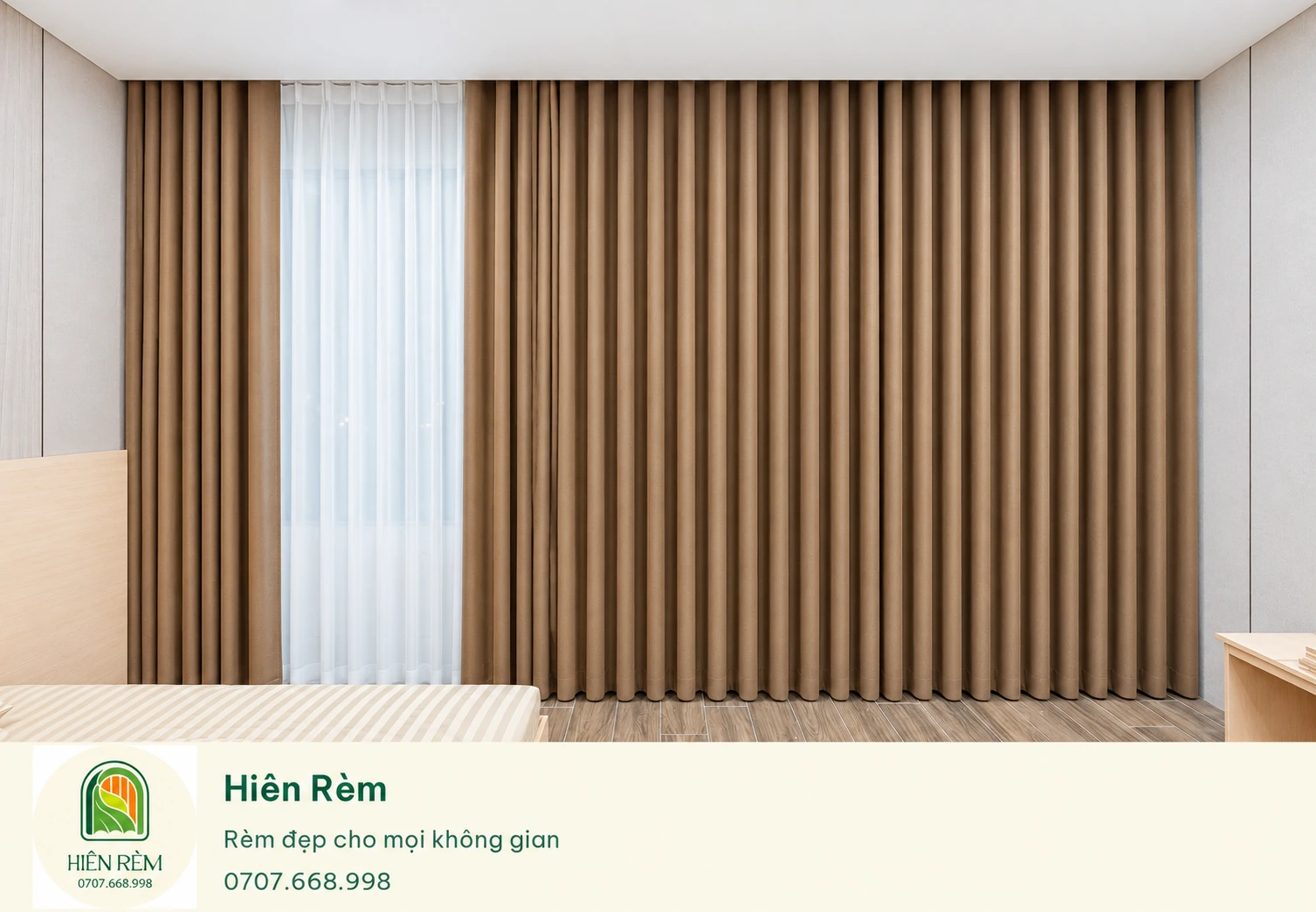
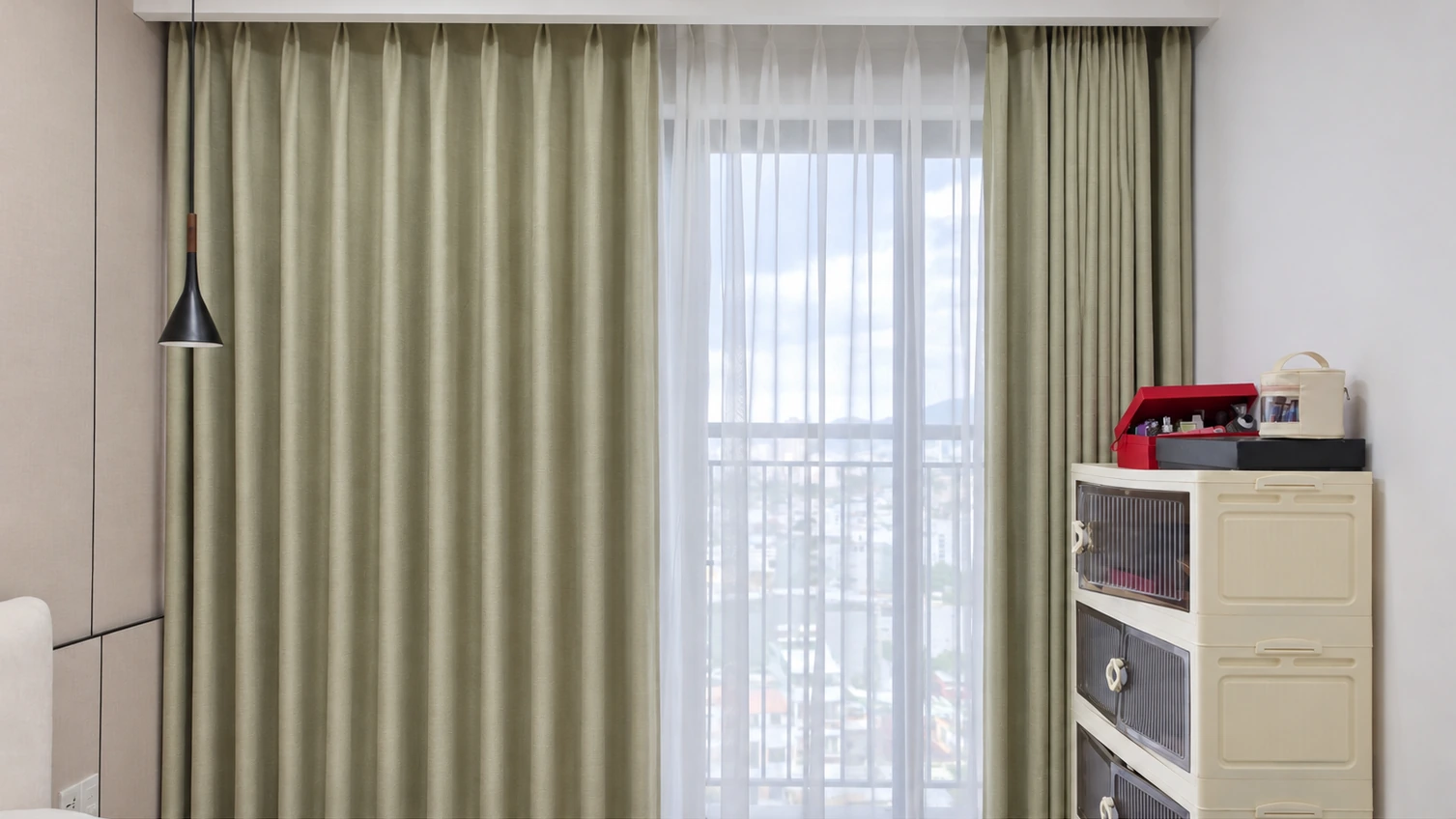
Add sheers for daytime use
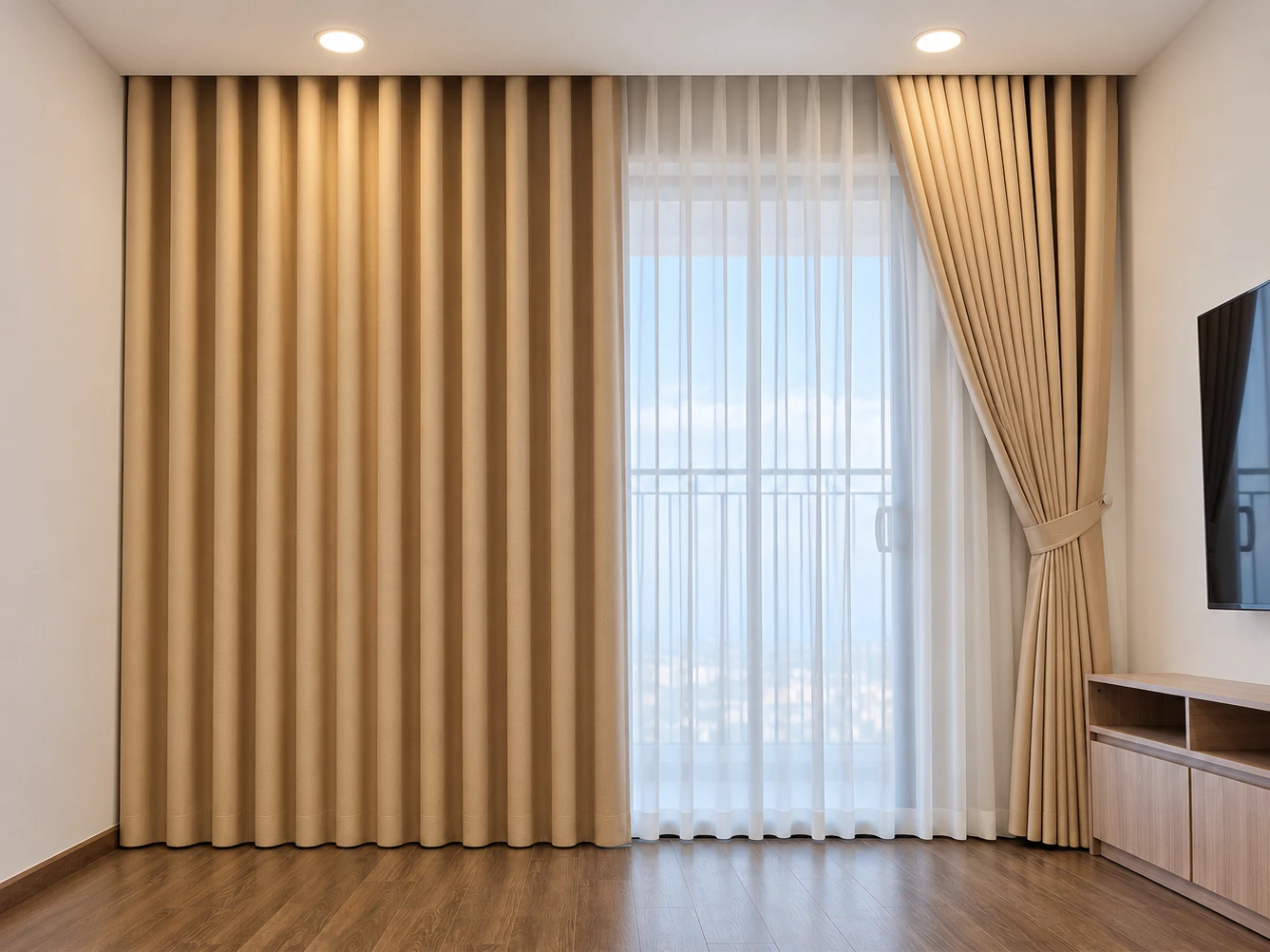
A bedroom does not need to be dark all day. For reading or tidying up, open the main curtains and keep the sheers across the glass for softer light. Close the main fabric for evening privacy, as sheers alone may reveal silhouettes when the lights are on.
With a narrow curtain recess, first check there is room for two tracks and for both layers to move freely. It saves the disappointment of choosing a fabric combination that will not fit.
Choose the colour in the bedroom
Hold the sample beside the headboard, walls and floor, in daylight and with the bedside lamps on. Keep the agreed fabric code, heading, fitting details and light-control requirements in the quotation so there is a clear reference for the finished curtains.
Reference material: Hunter Douglas — light control and privacy
Choosing curtains for your home?
Send Hiên a few photos of your windows and tell us what you have in mind. No measurements yet? Photos are a good place to start.
Enquire by emailView related curtains or blinds