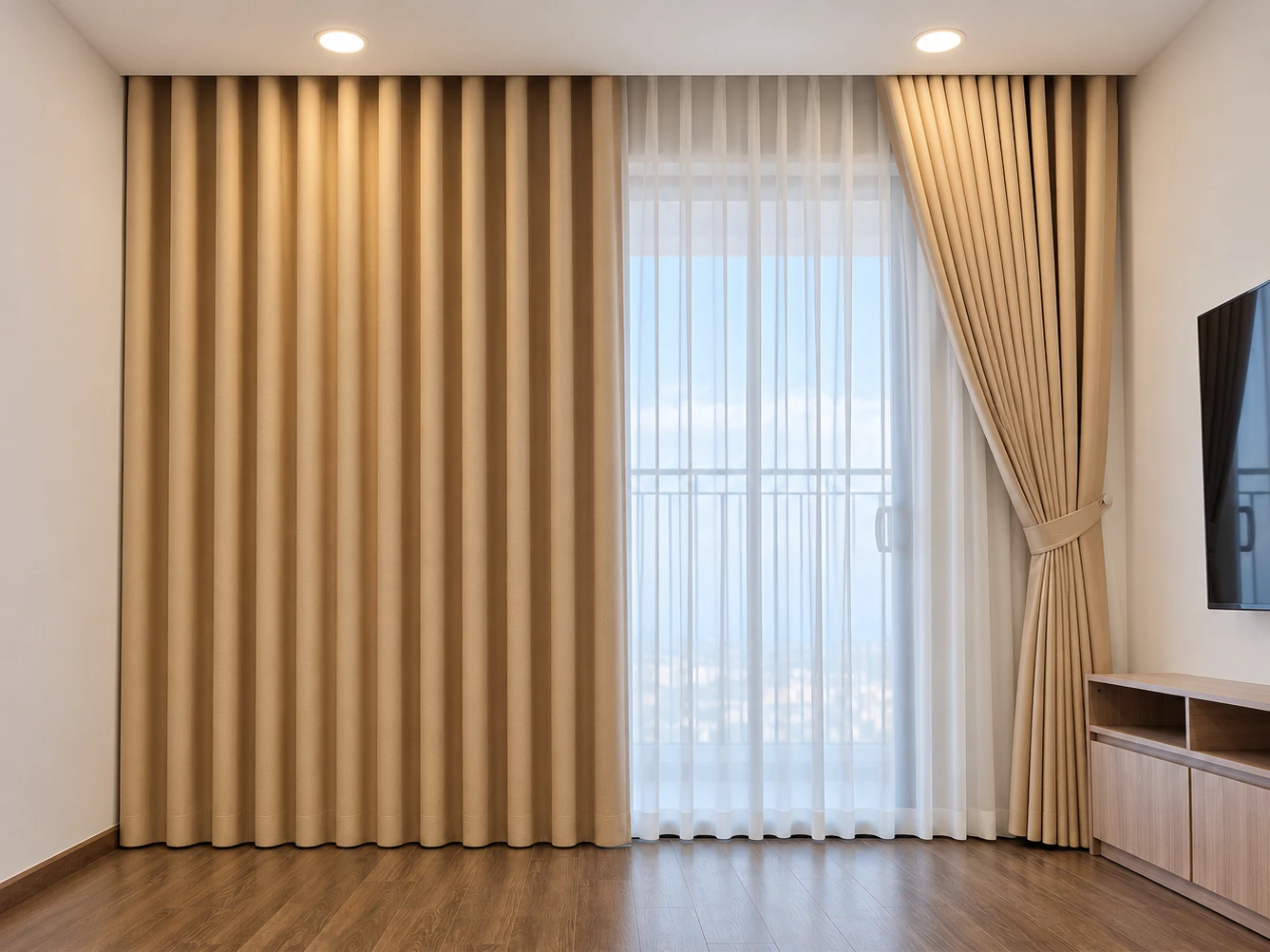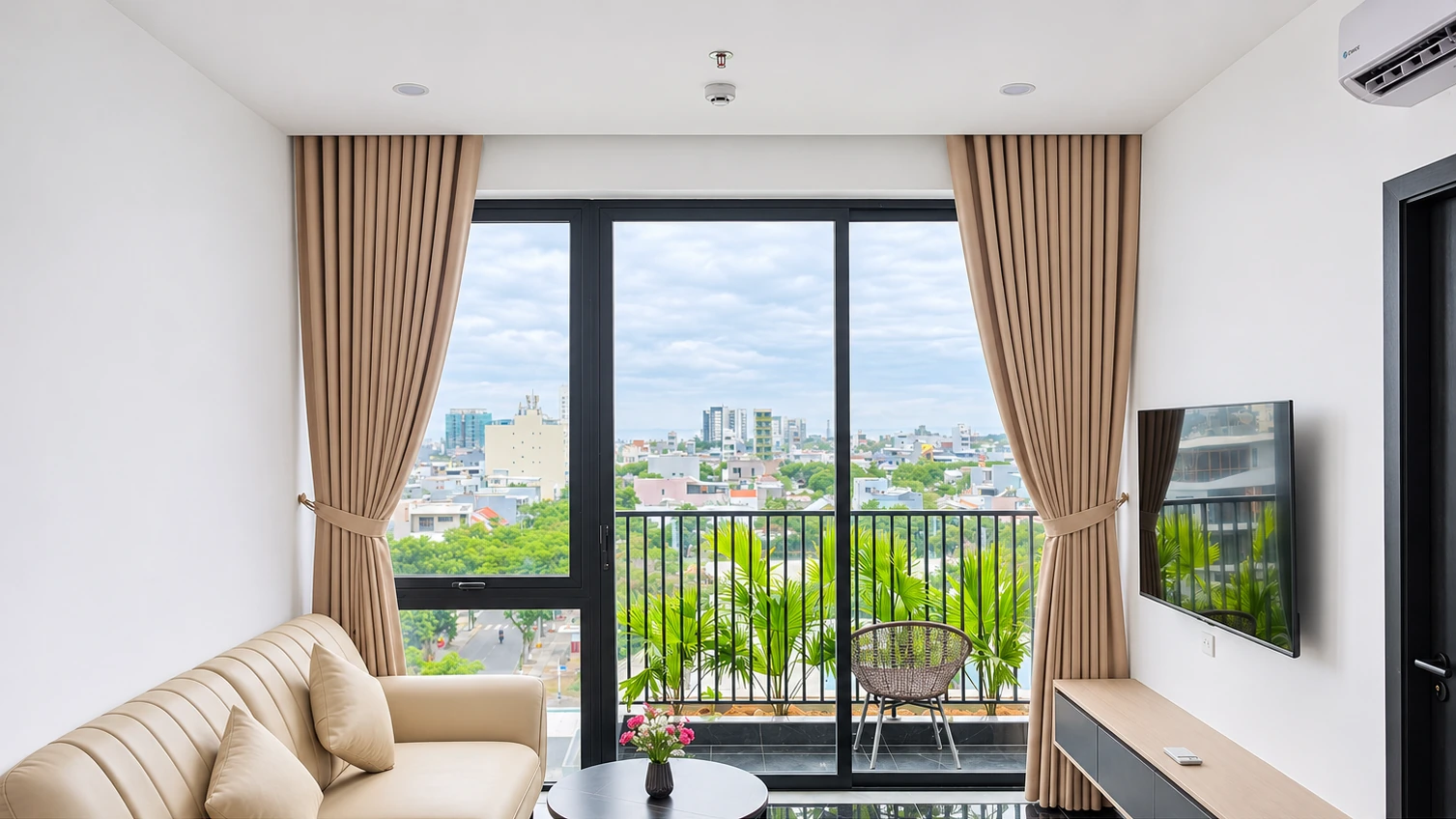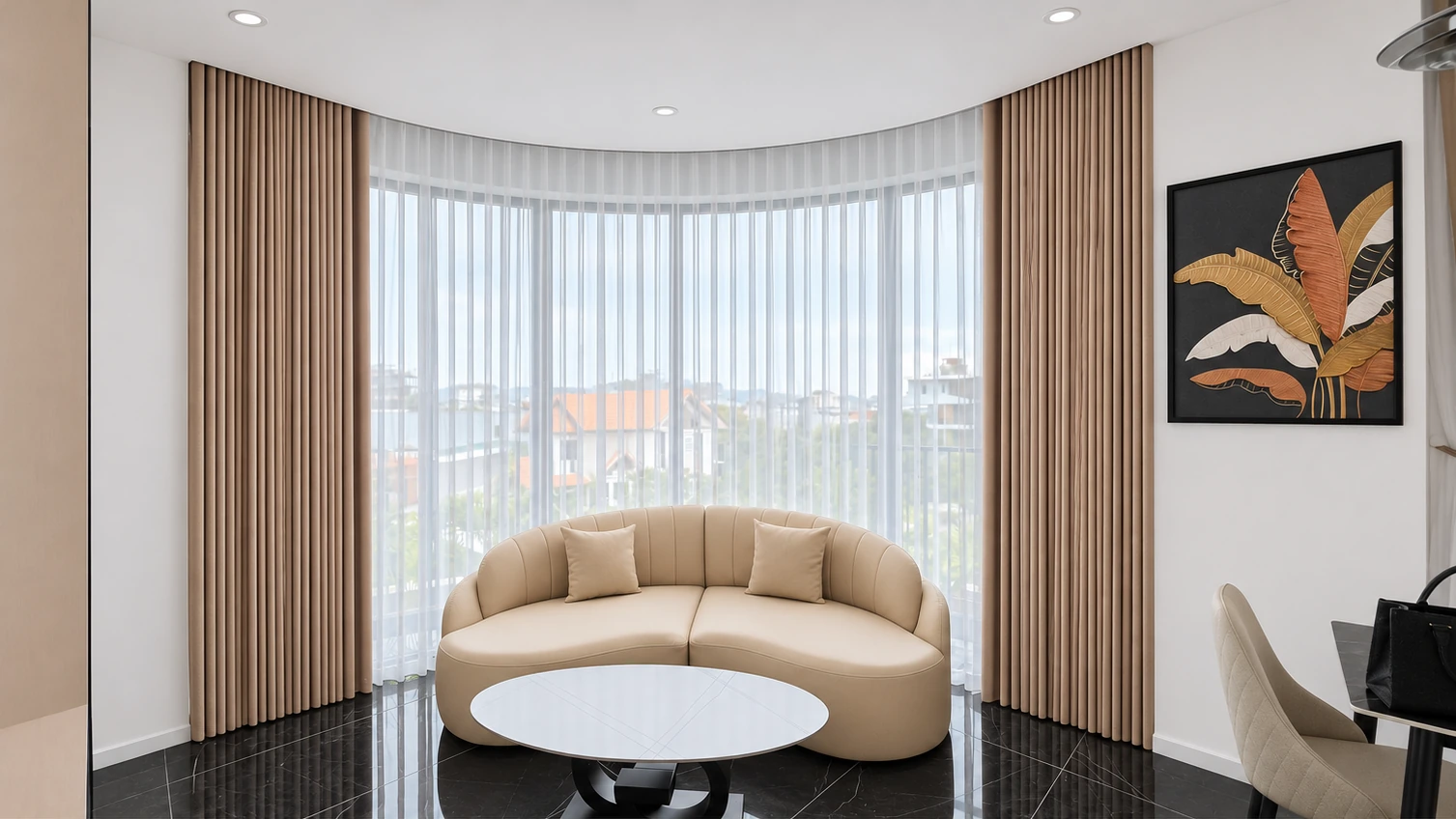
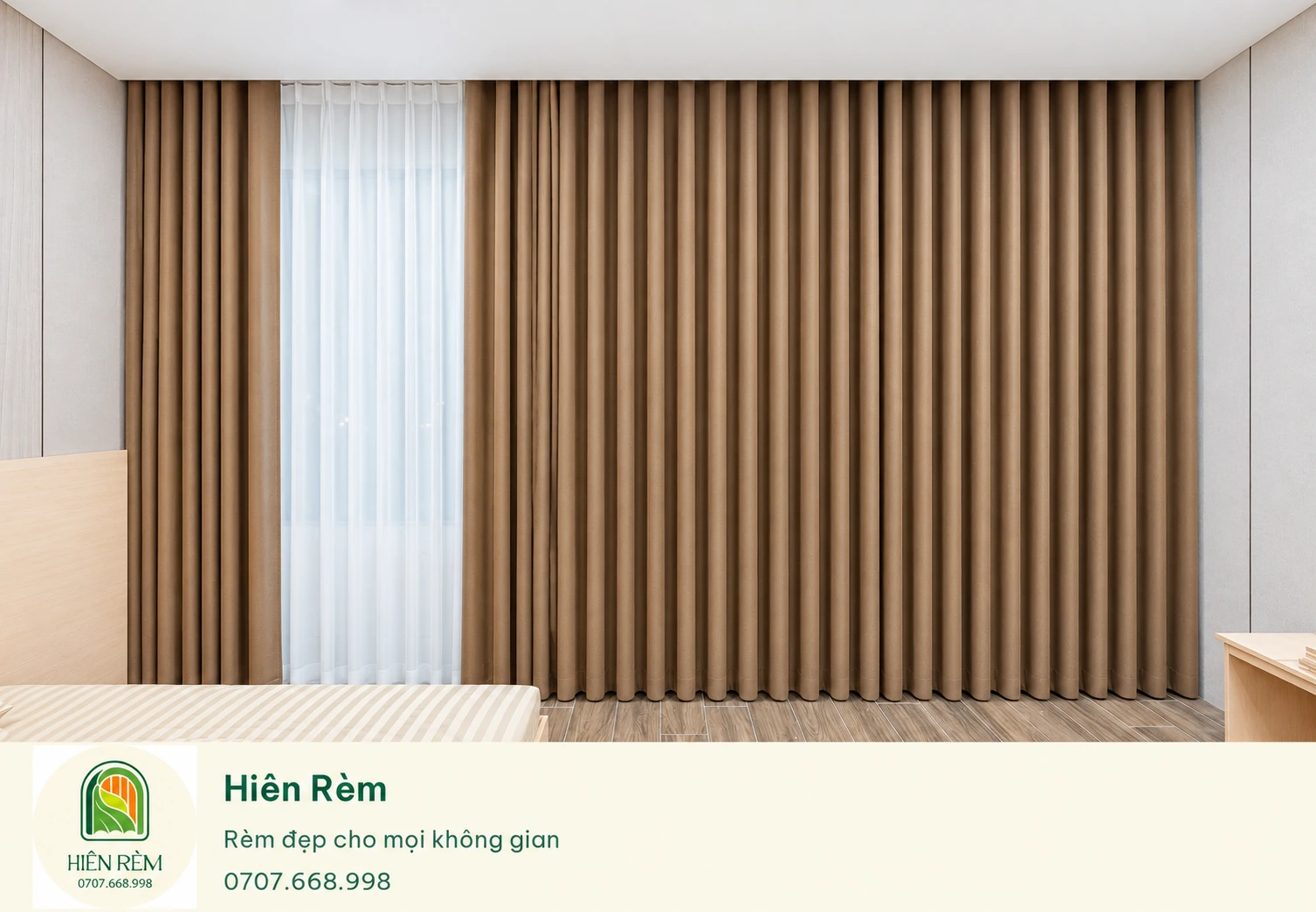
Wave: a continuous line of soft folds
Wave curtains form their folds through the heading tape and the spacing of the gliders on the track. The fabric also affects how evenly they hang. When viewing a sample, close it fully and draw it back again. Looking at the top explains the heading better than a close-up of folds halfway down the curtain.
Pleats: folds shaped at the heading
Pleated curtains have folds formed at the top and hang from suitable hooks. Different pleat styles use different amounts of fabric. Ask to see the pleat, the hook and the way the fabric falls on a sample. If you hope to reuse an existing track, send a photo so compatibility can be checked.
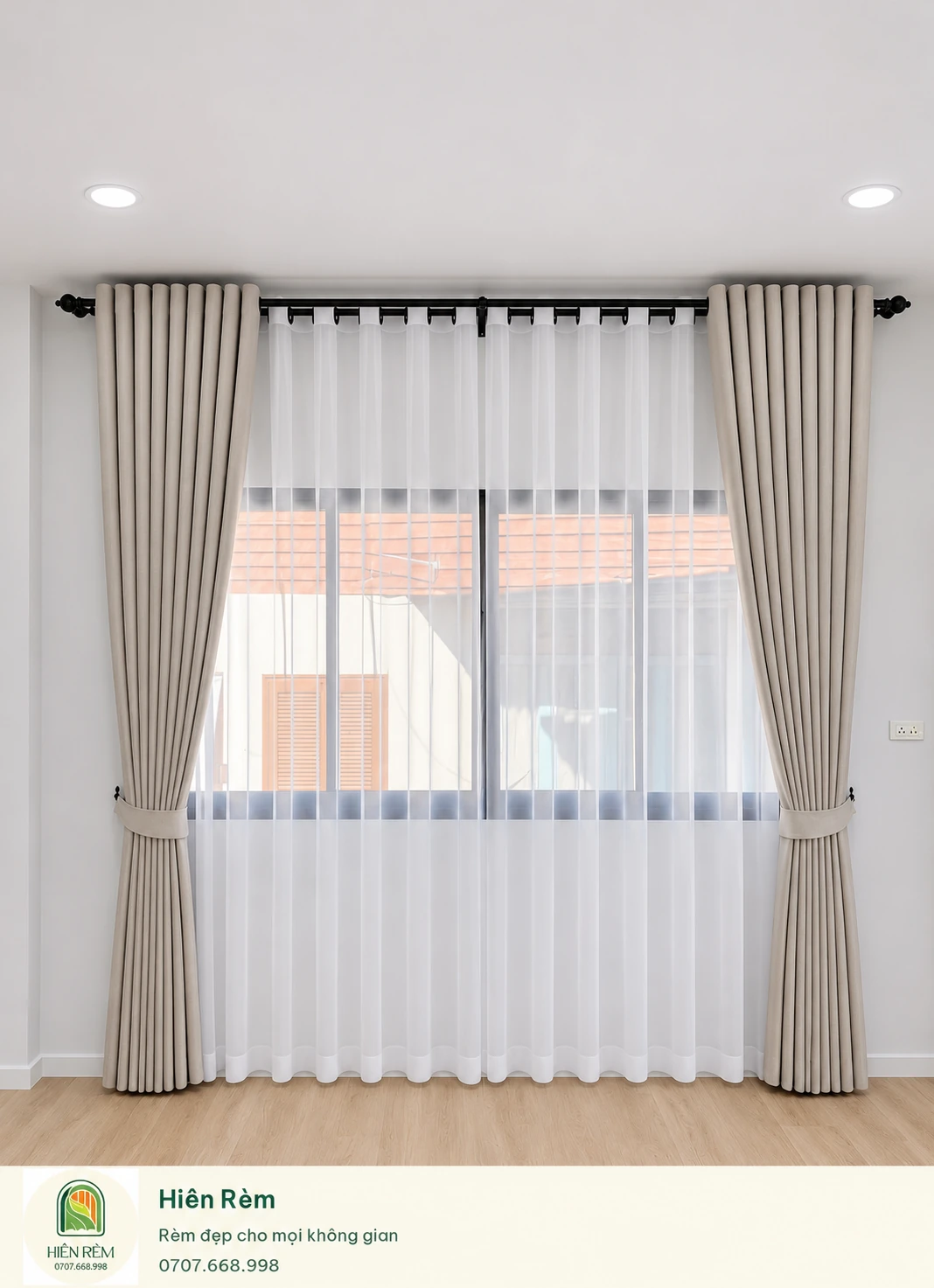
Eyelets: the pole is part of the look
Eyelets slide directly along a round pole, so the pole’s colour and shape become part of the room. Consider the bracket positions, projection and where the two panels meet. For a narrow ceiling recess, share a photo first: the pole and curtains need enough room to move.
Choose the fold, then work out the fabric
The size of the folds and whether the fabric is plain or patterned affect how much fabric is needed. Fabric width, joins and the covered window width matter too. Two quotations using the same “per metre” unit can therefore describe different finished curtains.
When sending a favourite curtain photo, mark what caught your eye: the folds, the pole or the opening arrangement. That helps Hiên discuss the heading and hardware. The final quotation should identify the fabric quantity, track or pole and the window it is for.
Reference material: Silent Gliss — Wave Curtains
Choosing curtains for your home?
Send Hiên a few photos of your windows and tell us what you have in mind. No measurements yet? Photos are a good place to start.
Enquire by emailView related curtains or blinds